

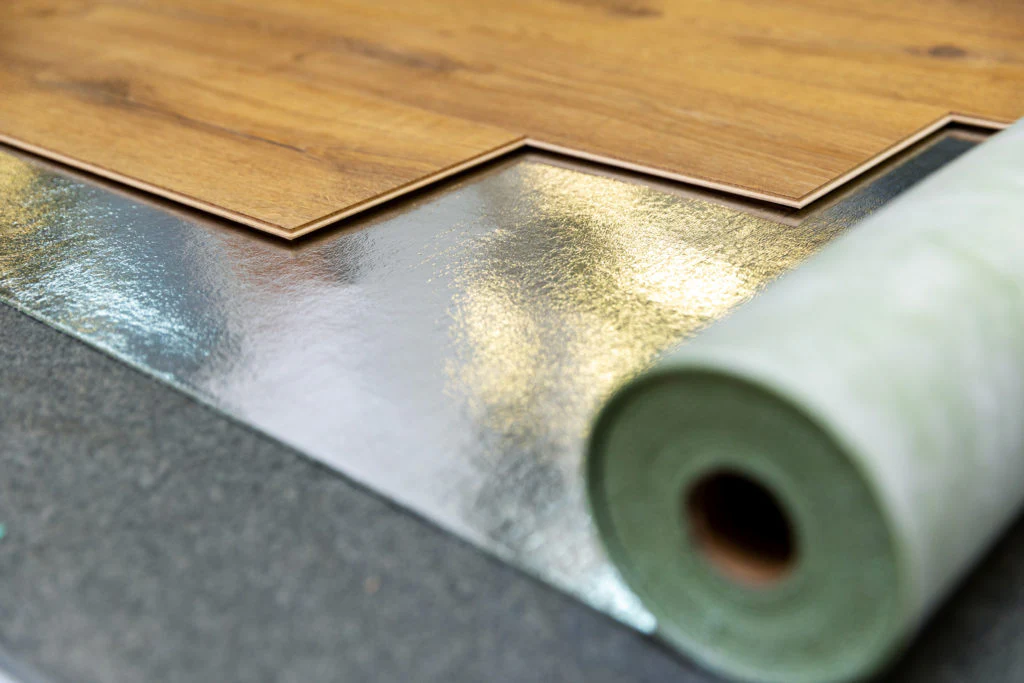
A new floor usually gets all the attention, but what goes underneath it has a huge effect on how it feels every day. If you’ve ever walked across a room and noticed a hollow sound, a little too much echo, or a floor that felt harder than expected, underlayment was probably part of the story. In homes across Western New York, that hidden layer can make a real difference in comfort, sound control, and long-term performance.
What underlayment actually does
Underlayment is the material installed between the subfloor and the finished surface. Its job is not to be seen. Its job is to improve how the floor performs. Depending on the product, it can soften footfall, reduce noise between rooms, smooth out minor subfloor imperfections, and add a bit of insulation underfoot.
That matters even more in places like Amherst, where long winters make cold floors feel colder. A well-matched underlayment can help a room feel quieter and more comfortable without changing the look you want. It also helps set realistic expectations. People often assume a beautiful floor alone will fix sound issues, but the overall feel comes from the entire system, not just the top layer.
Why it matters so much with luxury vinyl
This is especially important when choosing luxury vinyl flooring. LVP and LVT are popular for good reason: they’re stylish, durable, and easier to live with than many homeowners expect. But because the material is relatively thin compared with some other surfaces, what sits beneath it has a direct impact on how solid and quiet it feels.
Some products include an attached pad, while others are designed to be installed over a separate layer. That’s why the right answer is never one-size-fits-all. Thickness, core construction, locking system, and the condition of the subfloor all play a role. In many homes, the goal is not to make the floor soft. It’s to reduce that sharp tap or echo and create a more settled, finished feel when you walk across the room.
Sound control starts with the room below
When people ask about sound reduction, they usually mean one of two things: the noise they hear in the room itself, or the sound that carries to the level below. Underlayment can help with both, but it won’t erase every noise on its own. Furniture, room size, ceiling height, and wall materials also affect how sound behaves.
In second-floor rooms, hallways, and busy family spaces, the right layer underneath can take the edge off everyday footsteps. In lower-level spaces where moisture is a concern, it also helps to look at waterproof flooring as part of the bigger picture, since protection and comfort often need to work together. The best plan balances acoustics, durability, and the conditions of the space instead of chasing a single feature.
Comfort depends on proper prep, not just padding
A common misconception is that thicker always means better. In reality, too much cushion under a floating floor can create movement that stresses the locking joints over time. Good comfort comes from proper product selection, a flat subfloor, and an installation approach that supports the material instead of fighting it.
That’s one reason many homeowners in Buffalo and the surrounding area like to compare samples at home before making a final call. Our mobile showroom service lets you see how color, texture, and construction feel in your actual lighting and on your own schedule. Sometimes the right choice becomes obvious once you can hear and feel the difference in the room where the floor will live.
The best choice is the one that fits your space
Underlayment is easy to overlook because it stays out of sight, but it plays a major role in how your new floor sounds and feels for years to come. If you’re comparing options for a home in Amherst or anywhere nearby, we can help you sort through what matters and what doesn’t. When you’re ready for expert guidance, request a free estimate and we’ll help you choose a flooring system that fits your space from the subfloor up.


