

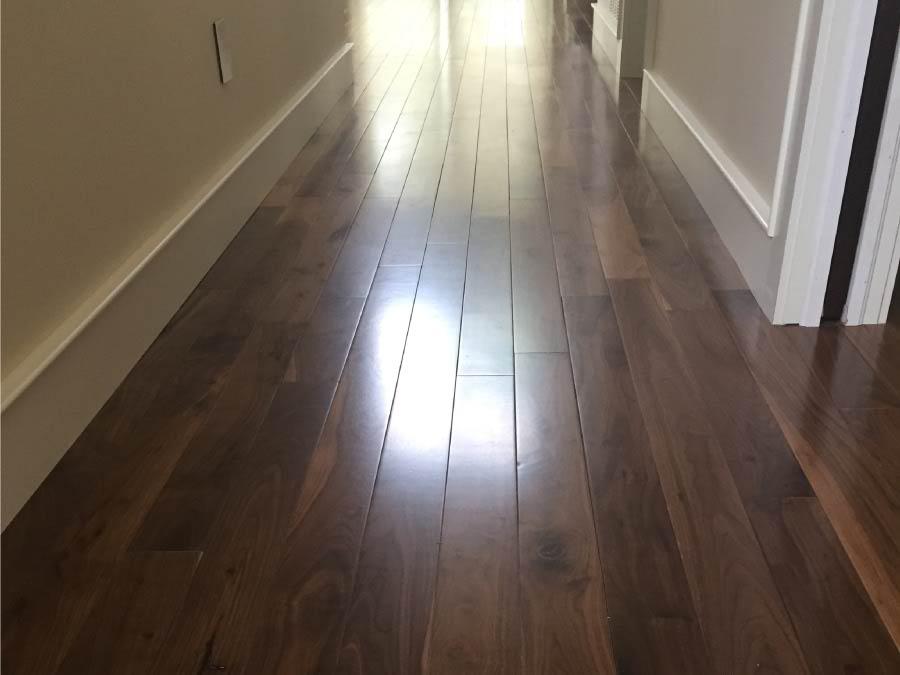
The stairway and upstairs hall do a lot of quiet work in a home. They connect busy spaces, collect daily foot traffic, and often sit where guests can see them right away. In many Amherst homes, that area also has to bridge different rooms without feeling choppy. When the flooring is coordinated well, the whole level feels calmer, more intentional, and easier to live with.
Start by treating the stairway and hall as one visual zone
A common mistake is choosing the stairs first, then trying to “match” the hallway afterward. That usually leads to small differences in color, texture, or plank detail that stand out more than people expect. Instead, it helps to think of both areas as one continuous design moment. The goal is not perfect sameness for its own sake, but visual flow.
That is one reason many homeowners like our mobile showroom service. Looking at samples in your own light, next to your wall color and trim, makes it much easier to spot the option that connects both spaces naturally. A sample that feels right in a store can read completely differently once it is placed against your railing, paint, and bedroom thresholds.
Decide what kind of transition you want people to notice
Not every coordinated look has to be identical from top to bottom. Some homes look best when the stair treads and hallway floor blend closely, creating a clean, uninterrupted path. Others benefit from a subtle shift, such as a slightly deeper stair tone or a different surface texture that adds definition without looking disconnected.
The key is consistency in undertone. If one surface leans warm and the other leans cool, the difference can feel accidental. If both share the same visual temperature, the contrast tends to look intentional. This is especially important in Western New York homes, where natural light changes dramatically from season to season and can exaggerate small mismatches.
Choose materials that handle real traffic, not just good first impressions
Stairs see concentrated wear. Hallways deal with repeated passes, pets, and whatever gets tracked in from the weather. That is why durability matters just as much as color coordination. A floor that looks beautiful on day one but shows scuffs too quickly can make the whole area feel tired.
For many families, luxury vinyl flooring strikes the right balance. It offers the wood-look style people want while standing up well to everyday use, and it works especially well when you want the hall to feel polished without becoming high maintenance. In homes where moisture is part of the equation near entries or lower-level stairs, waterproof flooring can also make sense because it is built for spaces that have to handle wet boots, slush, and damp conditions more gracefully.
Pay attention to scale, edge detail, and sightlines
Even when the color is right, the wrong plank size or pattern can throw off the look. Narrow visual lines on the stairs paired with very wide boards in the hall may feel out of proportion. The same goes for overly busy grain patterns that compete with railing details or nearby room transitions. Good coordination is often about restraint.
This is where an in-home comparison becomes especially useful in Buffalo-area homes with varied layouts and older architectural details. Seeing full-size samples near the first step, landing, and upper corridor helps answer practical questions fast: Does the grain feel too active? Does the tone flatten the trim? Does the stair runner, if you plan to add one, still make sense with the floor beneath it?
A thoughtful plan makes the whole floor feel better connected
When the stairs and hallway work together, the result is bigger than either surface alone. The space feels smoother to walk through, easier on the eye, and more finished overall. If you want help comparing styles in your own home, request a free estimate and we’ll help you narrow down the right fit for your layout, lighting, and daily routine.


