

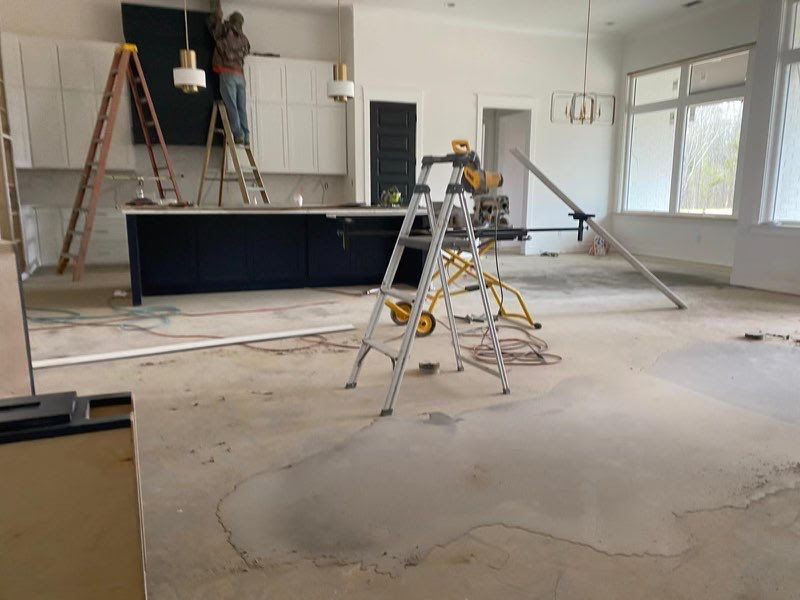
A concrete slab can look perfectly dry and still hold enough hidden moisture to cause trouble later. That’s what makes floor prep so important. If you skip testing and rush straight to installation, you risk planks that shift, adhesives that fail, or edges that start to lift after one wet season. In a region where snow, slush, and damp basements are part of life, taking the slab seriously from the start simply saves headaches.
Why slab moisture matters more than people think
Concrete is porous. It can absorb moisture from the ground, hold water from the original pour, and react to seasonal humidity changes long after a home or building feels finished. That matters because many flooring problems blamed on the product are really prep problems underneath. The slab sets the stage for everything above it.
In older homes and lower-level spaces, that risk tends to show up in subtle ways first. A musty smell, darkening at the edges, or minor cupping nearby can all point to moisture moving through the surface. That’s one reason many homeowners exploring waterproof flooring are also asking better questions about what needs to happen before the first plank goes down.
What proper moisture testing actually tells you
Testing is not just a box to check. It helps confirm whether the slab is ready now, needs more drying time, or needs additional prep before installation. Surface appearance alone does not tell the full story. A floor can feel dry to the touch and still release vapor that affects adhesives, underlayments, or the locking system over time.
The goal is simple: match the installation method to real site conditions. That is especially important in Amherst, where freeze-thaw cycles and damp lower levels can create conditions that are easy to underestimate. Good testing replaces guesswork with evidence. Once you know what the slab is doing, you can choose the right next step instead of hoping the problem stays hidden.
Floor prep is where long-term performance is won
Even a moisture-resistant product needs a clean, stable, properly prepared surface. That usually means checking for cracks, removing old residue, leveling low spots, and making sure the slab meets the manufacturer’s requirements. If the floor is uneven, the finished surface may feel hollow, flex underfoot, or wear faster than it should.
In business settings, prep becomes even more critical because the floor has to handle rolling loads, heavier traffic, and tighter downtime windows. That is why planning for commercial flooring usually starts below the surface, with a careful look at moisture conditions, substrate flatness, and how the space will actually be used day to day.
The right product still depends on the right process
People often hear “waterproof” and assume the job is automatically protected. The reality is more nuanced. A waterproof surface helps defend against spills and tracked-in messes, but it does not erase slab conditions underneath. Moisture management and product selection work together, not separately.
That’s where experience makes a real difference. After decades of helping families and businesses across Western New York, we know that a basement, entry, or ground-level room can demand a different prep strategy than an upper-floor remodel. In places like West Seneca and Rochester, those details matter because the local climate has a way of exposing shortcuts.
Start with the slab, then build with confidence
The best-looking floor in the showroom will only perform as well as the surface below it. When moisture is tested properly and prep is done with care, your new floor has a much better chance of staying stable, attractive, and easy to live with for years. If you’re planning a project and want guidance on what your space may need, request a free estimate and we’ll help you take the next step with confidence.


