

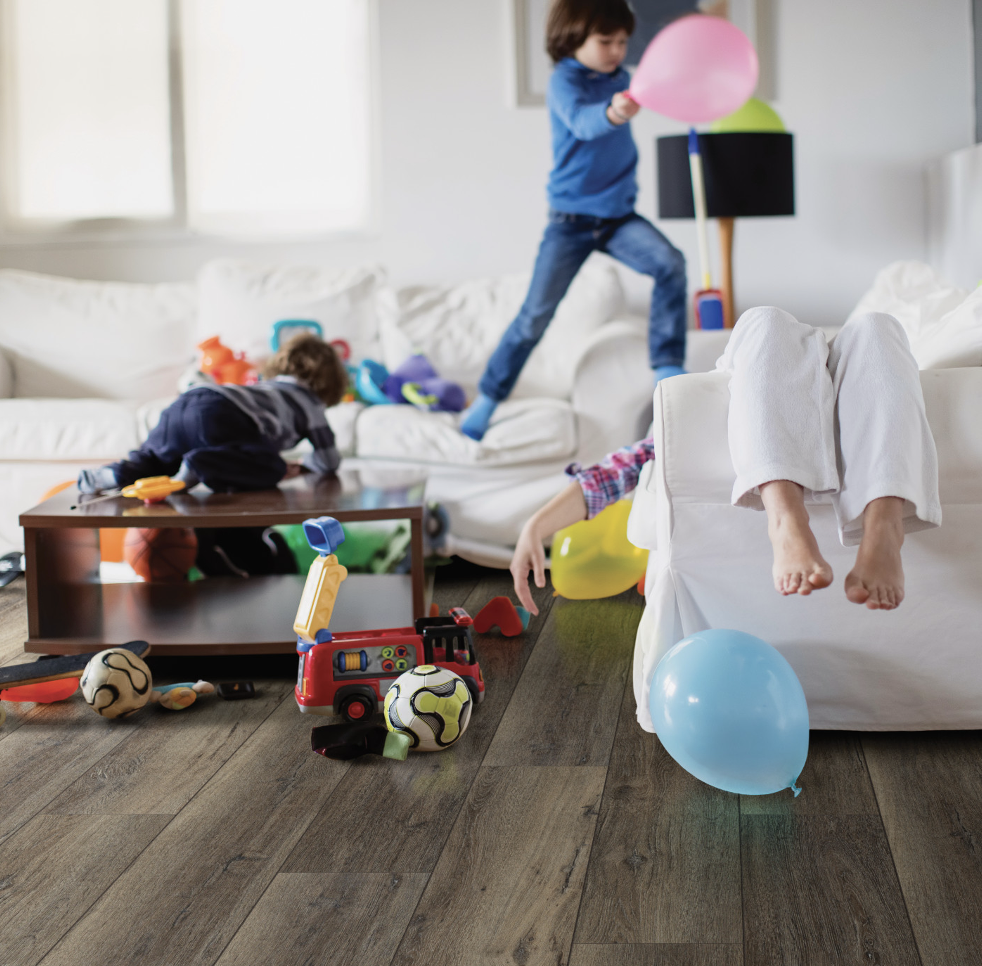
Picture this: you’ve just settled onto the couch when you hear every footstep, toy drop, and late-night snack run from the floor above you. In a lot of Western New York homes, upstairs bedrooms and hallways turn into echo chambers because the wrong flooring went in years ago. The good news is, you can dramatically quiet things down without giving up durability or style.
What Makes a Floor “Quiet” Upstairs?
Sound travels differently between levels than it does within a single room. You’re dealing with two types of noise: the thud of footsteps and dropped items, and the airborne sounds of voices or music. Upstairs, the floor itself plays a big role in both.
The quietest setups combine a resilient surface with the right underlayment. Materials that have a little “give” absorb impact instead of bouncing it straight into the ceiling below. That’s why adding a quality pad under a hard surface makes such a difference in how a second floor sounds and feels.
Older homes in Amherst often have wood subfloors that creak or flex, which can amplify noise. When we look at an upstairs project, we start by checking the subfloor, then talk through which surface will balance quiet, comfort, and long-term durability for your family.
Why Luxury Vinyl Works So Well Upstairs
Many homeowners think of carpet first for a quiet bedroom, but modern luxury vinyl has become a favorite for upstairs spaces that see more than just sleeping. Kids run, pets play, and in our climate there’s no shortage of wet boots and spilled drinks.
Today’s luxury vinyl flooring pairs a tough wear layer with a slightly flexible core, which helps soften impact noise. Many products include an attached pad, and we can also add underlayment to further reduce sound transmission between floors. You end up with a surface that’s noticeably quieter than traditional hardwood or basic laminate, yet far more resistant to scratches and moisture than older materials.
Another benefit upstairs is comfort. Luxury vinyl stays more stable in temperature than stone or tile, so bare feet on a winter morning don’t get such a shock. That’s especially helpful in homes around Buffalo where second floors can run cooler in the colder months.
Balancing Quiet, Durability, and Maintenance
Bedrooms need calm; hallways need toughness. Upstairs spaces usually demand both. Luxury vinyl handles rolling desk chairs, pet nails, and constant hallway traffic without the refinishing or strict maintenance schedules that real wood often needs.
In homes with kids or teens, it’s common for bedrooms to double as playrooms, study areas, and hangout spots. Spills, craft projects, and moving furniture are everyday events. A hard surface that wipes clean and shrugs off dents can actually stay looking better than soft flooring over time, while still keeping noise down when it’s paired with the right pad.
If moisture is a concern—maybe you’re redoing a second-floor laundry or a bath that opens into a bedroom—our selection of waterproof flooring lets you keep a consistent look across the entire level without worrying about splashes or humidity.
Getting the Right Look in Your Own Lighting
Quiet and durable are essential, but the floor still has to look good with your paint, trim, and furniture. Upstairs lighting can be very different from the first floor, and colors often read warmer or cooler than they do in a showroom.
To make decisions easier, our mobile showroom service brings luxury vinyl samples right into your bedrooms and hallways so you can see how each option looks with natural light during the day and lamps at night. Many families also like to stop into one of our Western New York showrooms first to walk on different constructions and feel how quiet and cushioned they are underfoot.
Ready to Quiet Things Down Upstairs?
If you’re tired of hearing every step from the floor above, the right combination of subfloor prep, underlayment, and luxury vinyl can make your home noticeably calmer without sacrificing durability. When you’re ready to explore options for your own bedrooms and hallways, you can request a free estimate and we’ll help you design a quieter, longer-lasting upstairs that fits your style and budget.


